Socializing a Akita With Kids, Dogs and Strangers
General training information. Every dog is an individual; for health or behavior concerns, see your veterinarian.
Akita socialization is not about turning a dignified, serious dog into a party animal. It is about teaching your dog to stay calm and neutral around the people and animals in its life. That takes planning, patience and honest limits.
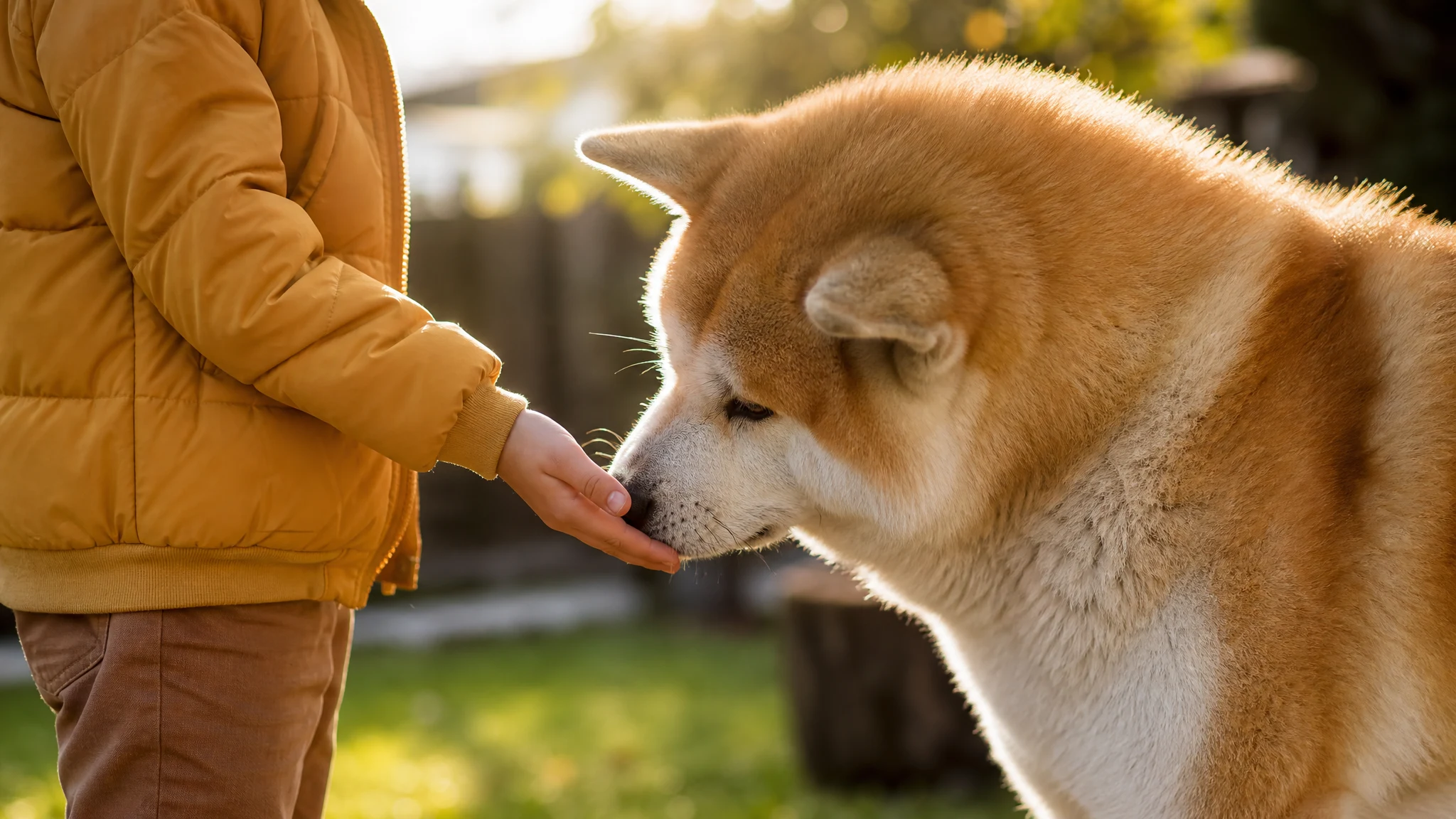
This guide walks you through a step-by-step plan. It covers strangers, children and other dogs, because those are the three areas where owners most often ask for help.
What to Know About the Breed First
The Akita Club of America (ACA) describes the Akita as proud, confident and exceptionally loyal. The American Kennel Club (AKC) calls Akitas quiet, fastidious dogs that are wary of strangers and often intolerant of other animals.
That reputation shapes how you socialize. You are not trying to change the breed. You are teaching one dog to cope well with the world it lives in. Individual dogs vary, so watch your own dog closely.
The ACA also says the breed is challenging for first-time owners. If this is your first dog, consider getting help from a qualified, reward-based trainer early.
Materials You Will Need
- A well-fitted flat collar or a front-clip harness, plus a sturdy 6-foot leash
- Small, soft, high-value treats your dog loves
- A securely fenced yard or other enclosed space for any off-leash time
- Baby gates or a crate for quiet breaks
- A chew or stuffed toy for settling
- A notebook to log what your dog saw, how it reacted and how long it recovered
- Calm, dog-savvy helper adults who will follow your instructions
Step 1: Start Early and Keep Sessions Short
The AKC says Akitas must be trained consistently starting in puppyhood. The ACA describes a puppy class for 3 to 5 month olds that emphasizes socialization. Check with the club or a local reward-based trainer about what is available near you.
Keep outings short and positive. Five to ten minutes of calm exposure beats an hour of overwhelming stimulation. End each session while your dog is still relaxed.
Remember that a cute eight-week-old is very different from a full-grown adult. The ACA lists adult males at 26 to 28 inches and females at 24 to 26 inches. The AKC gives weights of 100 to 130 pounds for males and 70 to 100 pounds for females. Build the habits now that you will want in a dog that size.
Step 2: Teach a Calm Response to Strangers
Because the AKC describes the breed as wary of strangers, the goal is neutral politeness, not enthusiastic greetings. Your dog does not need to love every visitor.
- Pick a distance. Stand far enough from a person that your dog notices them but can still take a treat.
- Mark and reward calm. When your dog looks at the person and stays relaxed, say a marker word such as "yes" and give a treat.
- Close the gap slowly. Over many sessions, move a little closer. If your dog stiffens, stares or stops eating, you went too fast. Back up.
- Let your dog choose. Ask visitors to ignore the dog, avoid staring and never reach over its head. Let your dog approach if it wants to.
- Practice at home. Use a gate or leash when guests arrive. Reward your dog for settling on a mat while people come and go.
The ACA notes that Akitas guard the home instinctively, and says no training is needed for this. That means visitors are a big deal to many Akitas. Plan introductions rather than letting the doorbell become a free-for-all.
Step 3: Build Safe Habits With Children
If you are wondering whether Akitas are good with kids, the ACA gives a careful answer. It says interactions with children should be respectful and well monitored. The AKC star rating for this trait could not be confirmed, so rely on the club's guidance and on your own dog's behavior.
That wording puts the responsibility on the adults. Here is a simple way to do it.
- Supervise every interaction. An adult stays within arm's reach and pays full attention. Phone down.
- Teach children the rules. No climbing on the dog, hugging around the neck, pulling ears or tail, or disturbing it while it eats or sleeps.
- Give the dog an exit. A crate, gate or separate room should always be available. Never force the dog to stay near children.
- Keep sessions short. Have the child toss a treat from a respectful distance, or sit and pet gently for a few seconds while you reward calm behavior.
- Separate when you cannot watch. If you leave the room, the dog goes behind a gate or into its space.
- Watch visiting children too. Other people's kids may not know the rules. Put the dog away if you cannot manage the situation.
Watch body language. Stiffening, freezing, a hard stare, lip licking, turning away or moving off are signs the dog wants space. Respect them early so it never needs to say more.
The sources reviewed here do not describe herding behavior in the breed, so this guide does not address it. The guarding instinct the ACA describes is a good reason to keep supervision strict, especially when friends and their children visit.
Step 4: Introduce Other Dogs Carefully
Akita with other dogs is the area that needs the most honesty. The ACA says Akitas have a genetic predisposition for intolerance of other dogs, especially of the same sex. It says the breed does best in a male and female pair or as the only dog.
The ACA also says same-sex dog aggression may not develop until the dog is fully mature. A friendly adolescent can change. Do not assume that early good behavior will last, and keep managing as your dog grows up.
- Skip the dog park. The ACA FAQ says dog parks are not appropriate places to socialize an Akita. Off-leash chaos, unfamiliar dogs and little control are a poor mix.
- Start with parallel walks. Walk with a calm, known, dog-friendly dog at a distance. Gradually shorten the distance as both dogs stay loose and relaxed.
- Choose partners wisely. Favor an adult dog of the opposite sex that is calm and tolerant. Avoid same-sex pairings.
- Keep the first meetings neutral. Use a neutral, enclosed space. Keep leashes loose and sessions short, and end before tension appears.
- Reward calm, not contact. Your dog does not have to greet other dogs. Walking past calmly is a real success.
- Manage at home. If you share a household with another dog, use gates, separate feeding areas and separate rest spaces, and pick up toys and chews that might cause a conflict.
The ACA also lists high prey drive among the breed's known challenges. Cats, small dogs and other small pets need cautious introduction. Keep them separated at first, with a barrier between them. Never leave them alone together until you have seen a long record of calm behavior.
Step 5: Keep Walks Secure
The ACA warns against letting an Akita off leash in an unsecured area. It also says the breed will go hunting on its own if off leash. A loose Akita is both a safety risk to your dog and a risk to other animals.
The ACA says the original purpose of the breed was hunting bear and guarding property. The AKC says Akitas were bred to hunt in the mountains of northern Japan, going after elk, wild boar and bear. That history helps explain why a strong prey drive and an independent streak appear on the ACA's list of challenges.
Use a leash on walks, and keep off-leash play to fully fenced spaces. For more on building a foundation of good manners, see the complete guide to Akita training for owners.
Step 6: Keep Training Reward-Based
The AKC describes the Akita as very intelligent and loyal, but independent and headstrong. The ACA calls the breed very stubborn when a command is repeated. So skip nagging. Ask once, make the reward worth it and keep sessions short and fun.
Use reward-based methods in line with the American Veterinary Society of Animal Behavior (AVSAB). Harsh corrections can raise stress and make reactions worse. Pain-based tools and confrontational handling are not part of a safe socialization plan for this or any breed.
Tips for Better Results
- Track your dog's stress signals and back up when you see them.
- Stay relaxed yourself. A tense leash tells your dog something is wrong.
- Plan every introduction. Surprise meetings are hard to control.
- Keep rehearsing calm routines at home, such as settling on a mat when the doorbell rings.
- Give your dog enough daily exercise. The AKC says a jog or brisk walk at least once a day meets the needs of most Akitas. A tired, settled dog copes better.
- Ask a qualified, reward-based trainer for hands-on help if you see growling, lunging or stiff stares.
Common Mistakes to Avoid
- Flooding the dog. Crowds, parties and busy events too early can backfire.
- Using the dog park. The ACA advises against it for this breed.
- Forcing greetings. Pulling your dog toward a stranger or another dog teaches it that you will not listen.
- Trusting a good adolescent. The ACA says same-sex aggression may not show until maturity.
- Leaving kids and dogs alone together. Even a calm dog needs an adult watching.
- Punishing a growl. A growl is a warning. Take it seriously, create distance and seek professional guidance.
- Skipping health checks. Sudden changes in behavior can be linked to pain or illness. Take those to your veterinarian.
What Results to Expect
With steady, careful work, many owners find that their Akita becomes calmer and more predictable around the people it sees regularly. Your dog may learn to ignore strangers politely, tolerate children under supervision and walk past other dogs without a fuss.
Results vary with the dog's genetics, age, history and the effort you put in. The ACA says the breed has a genetic predisposition for intolerance of other dogs, so some dogs may never be comfortable around unfamiliar ones. That is not a failure. Management, such as gates, leashes and separate spaces, is a normal part of living with the breed.
When to Get Help
If your dog shows aggression, bites or injures anyone, or you feel unsafe, stop the exercises and call a qualified, reward-based professional. Questions about pain, sudden behavior changes or any health concern should go to your veterinarian. The ACA also recommends choosing a health-testing breeder, and its health resources are a good place to start.
Sources
- Akita Club of America, Meet The Akita
- Akita Club of America, Frequently Asked Questions
- Akita Club of America FAQ, dog park
- Akita Club of America, Living With An Akita
- Akita Club of America, The Akita
- Akita Club of America, How To Find the Right Puppy
- Akita Club of America, Obedience
- American Kennel Club, Akita breed page
- American Kennel Club, Akita History