Akita Training: The Complete Guide for Owners
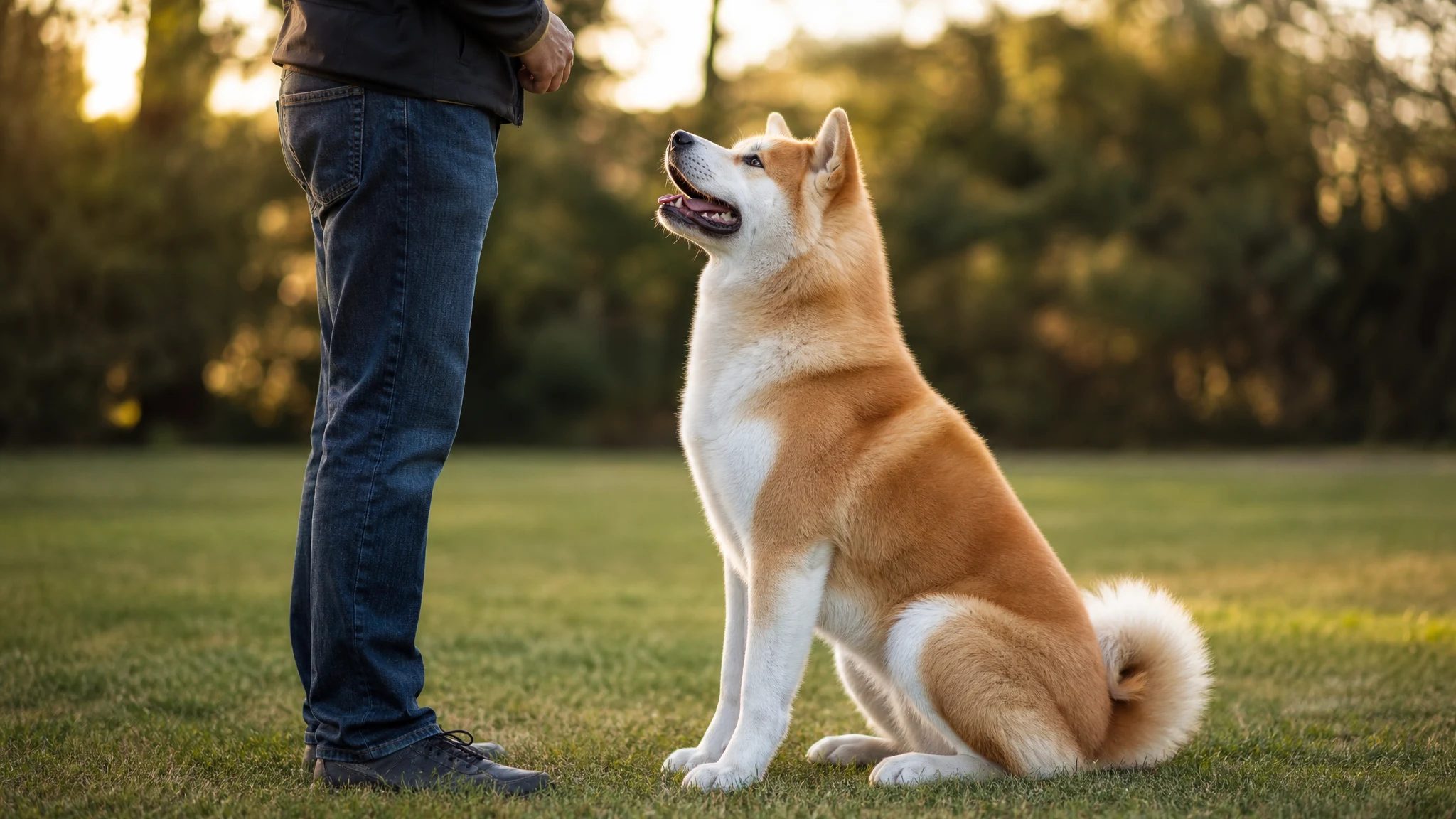
General training information. Every dog is an individual; for health or behavior concerns, see your veterinarian.
The Akita is a dog of real presence. It is proud, quiet, loyal and a lot of dog. Akita training is not about forcing a big, strong-minded dog to obey. It is about understanding what this breed was built to do, then teaching it a good life inside your home.
This guide covers how to train an Akita from puppyhood to adulthood. It explains the breed's history, the stages of training, motivation that works, exercise and mental work, and the challenges that catch owners off guard. I like this breed a great deal. I will also be honest about where it is hard.
Key takeaways
- The American Kennel Club (AKC) calls the Akita very intelligent and loyal, but independent and headstrong. It says the dog must be trained consistently, starting in puppyhood.
- The Akita Club of America (ACA) says the owner should lead early and train the dog personally. It also says the breed is challenging for first-time owners.
- Use humane, reward-based methods. They fit the guidance of the American Veterinary Society of Animal Behavior (AVSAB), and they suit a dog that digs in when pushed.
- The ACA warns of a genetic predisposition to intolerance of other dogs, especially of the same sex. It says this may not show until the dog is fully mature.
- The ACA says dog parks are not appropriate places to socialize an Akita, and that off-leash time in an unsecured area carries risk.
- Exercise needs are medium. Mental work and calm routines matter as much as the walk.
- Health questions belong with your veterinarian.
In this guide
- What the Akita was bred for, and why it shapes training
- Temperament: what the breed clubs say
- Training stages from puppy to adult
- Motivation that works for an Akita
- Exercise and mental work
- Challenges to plan for
- Health, screening and when to call the vet
- Sources
What the Akita Was Bred For, and Why It Shapes Training
Every breed carries a job description in its genes. Training goes better when you read it before you start.
Origins in northern Japan
The AKC says the Akita as we know it was developed in the early 17th century in the Akita prefecture of northern Japan. In its history article, the AKC says the breed was bred to hunt in the mountains there, going after elk, wild boar and bear.
The Akita Club of America describes the original purpose as hunting bear and guarding property. The ACA also says the Akita served as a palace guard.
What that job description means at home
A dog bred to work big, dangerous game in rough country did not need to wait for instructions. It had to think for itself, stay steady under pressure and make decisions far from its people. A dog bred to guard property learned to watch its surroundings and take them seriously.
You can see this in the traits owners describe today:
- Independence. The AKC calls the breed independent and headstrong. An Akita often wants to know why before it agrees to do something.
- Guarding. The ACA lists instinctive guarding of the home among the breed's challenges. It says the dog needs no training to guard.
- Prey drive. The ACA says the Akita has high prey drive, and that cats, small dogs and other small pets need cautious introduction.
- Roaming to hunt. The ACA says an Akita will go hunting on its own if off leash.
None of this makes the breed bad. It makes the breed specific. Your training plan should work with these instincts, not pretend they are absent. Individual dogs vary, so treat these as the tendencies to plan for, not a script every Akita will follow.
A short note on the club and the standard
The ACA is the parent club for the breed. Its history page says it was founded in 1960, and that the AKC approved the breed standard on April 4, 1973. If you want to learn from people who have lived with the breed for decades, the ACA is the place to start.
Temperament: What the Breed Clubs Say
The AKC describes Akitas as quiet, fastidious dogs that are wary of strangers and often intolerant of other animals. The ACA describes the breed as proud, confident and exceptionally loyal.
Put those together and you get a dog that is devoted to its own people and reserved with everyone else. That reserve is normal for the breed. It is not something to punish. It is something to channel, and good training makes it manageable.
Size and what it means for training
The AKC gives the Akita's height as 26 to 28 inches for males and 24 to 26 inches for females. It gives weight as 100 to 130 pounds for males and 70 to 100 pounds for females. The ACA's FAQ describes typical weights of 100 to 115 pounds for males and 75 to 90 pounds for females.
Whichever range you use, this is a large, strong dog. A habit that is cute at eight weeks, like leaning on people or mouthing hands, is a problem at 80 pounds. The ACA makes the same point: a cute eight-week-old is very different from a full-grown adult. Train for the dog you will have, not the puppy you have today.
Barking, shedding and household manners
The ACA describes the breed as generally quiet and not prone to nuisance barking. That is one of the real pleasures of living with an Akita. It does shed heavily. The ACA says it sheds year-round, with a drastic increase during coat changes, and the AKC says the dense undercoat "blows" twice a year. Plan for grooming sessions and a good vacuum.
Children
The ACA says interactions between an Akita and children should be respectful and well monitored. Teach children how to behave around the dog, and supervise. Do not leave a large dog and a small child to work it out alone. Check the ACA's guidance if you are deciding whether the breed fits a family with young children.
Eye contact
The AKC notes that prolonged eye contact can be seen as a challenge by an Akita. A sensible habit is to avoid staring contests, and to teach children and visitors not to stare at the dog. A soft glance and a calm voice go a long way.
Training Stages from Puppy to Adult
If you want to know how to train an Akita, start with the AKC's advice. It says the Akita must be trained consistently, starting in puppyhood. The ACA says the owner should take control early and train the dog personally.
I would read "take control" as "be the clear, fair leader of the household." It does not mean force. Control comes from structure, calm management and teaching the dog what pays off. The AVSAB position is that reward-based training is the humane standard. Shock, prong and choke collars, alpha rolls, scruffing and dominance methods have no place in this plan. They carry real risks to the dog's welfare, and a proud, self-assured breed is the type most likely to answer pressure with resistance.
Stage 1: The puppy years
This is where Akita training tips matter most, because habits form fast and big dogs are hard to retrain.
- Start the day you bring the puppy home. Short, upbeat sessions beat long drills.
- Teach the basics with rewards. Sit, down, come when called, leave it and a settled wait at doors are the foundation. Keep your cues simple and use them the same way every time.
- Build handling skills. Practice gentle touching of paws, ears, mouth and body, paired with treats. A dog this size must accept grooming and vet exams calmly.
- Teach calm. Reward the puppy for lying quietly on a mat. A dog that can settle is easier to live with at every later stage.
- Manage the environment. Use gates, crates and leashes so the puppy cannot practice bad habits while you cannot supervise.
- Set household rules early. Decide now about furniture, jumping and mouthing, and keep to the rules. Mixed messages confuse any dog, and a headstrong one will use them.
Socialization
Socialization means safe, positive exposure to new people, places, surfaces, sounds and well-chosen dogs. It does not mean forcing contact.
The ACA offers a puppy class for 3 to 5 month olds, described as a developmental course that emphasizes socialization. Ask your local training club or the ACA what is available near you, and check with the organizer on current details.
The ACA is also clear on one point: dog parks are not appropriate places to socialize an Akita. Uncontrolled greetings and crowded off-leash areas are where a breed with a predisposition to intolerance of other dogs can learn bad lessons. Choose structured settings instead: a trainer-led class, calm walks past other dogs at a comfortable distance, and meetings arranged with known, stable dogs.
Stage 2: Adolescence
Adolescence is when many owners feel their well-trained puppy has forgotten everything. That is common across breeds, and a headstrong dog may test limits more. Stay consistent. Go back to easier criteria when needed, reward generously, and keep management in place. Do not escalate to harsher methods. Harshness tends to make a strong-willed dog stubborn and can damage your relationship.
Keep up the socialization work through this period, with an eye on how the dog reacts to other dogs. The ACA says aggression toward same-sex dogs may not appear until the dog is fully mature. A friendly young Akita is not proof that the problem will never come.
Stage 3: The adult dog
An adult Akita should have reliable manners, a good recall in secure settings, polite leash walking and the ability to settle in company. This is the stage for maintenance and for fun: new skills, sports and jobs, and regular refreshers on the basics.
Keep training for life. The AKC gives a life expectancy of 10 to 14 years, so you have a long partnership ahead. A few minutes of practice a day keeps skills sharp and the bond strong.
The importance of personally training the dog
The ACA says the owner should train the dog personally. A board-and-train program or a hired handler may teach tricks, but they cannot build the relationship. Classes and trainers are valuable. Choose a reward-based trainer, watch a class before you join, and do the daily work yourself.
Motivation That Works for an Akita
Because the Akita is independent, you have to make cooperation worth its while. Think of training as a trade the dog is free to accept.
Find what your dog values
Food works for many dogs. Others prefer a toy, praise, a short game or access to something they want, like going outside. Test a few options and watch which one makes your dog light up. Keep the best rewards for the hardest tasks, such as recall around distractions.
Keep sessions short and varied
The ACA calls the breed very stubborn when a command is repeated. Take that as a hint. If you say "sit" five times, you teach the dog that the first four can be ignored.
Instead, say the cue once. If the dog does not respond, calmly make it easier, help it succeed and reward. Then end on a good repetition. Short sessions that finish before boredom sets in work better than drilling.
Use what the dog wants
Real-life rewards are powerful with an independent dog. Ask for a sit before the door opens, before the leash goes on and before dinner is served. This builds good manners into the daily routine without a single drill.
Stay calm and fair
This breed reads people closely. A calm, confident handler gets better results than a loud or angry one. If you are frustrated, end the session and try again later. Never punish a dog for not understanding.
What to avoid
- Physical corrections of any kind, including collar jerks, pinning or scruffing.
- Staring the dog down or forcing it into a position.
- Repeating cues over and over.
- Long, boring sessions.
- Trainers who promise to "show the dog who is boss."
The AVSAB position statements on humane training are worth a read. If you hire a trainer, ask what methods they use and walk away from anyone who relies on pain or fear.
Exercise and Mental Work
How much exercise
The ACA rates the Akita's exercise level as medium. In its Living With An Akita page, it says a good walk or jog is enough and that the breed is not overly hyper. The AKC likewise calls for moderate exercise, saying a jog or brisk walk at least once a day meets the needs of most.
That does not mean a couch ornament. A well-exercised Akita is calmer, more focused and easier to train. Daily walks give you a chance to practice leash manners, calm passing of dogs and people, and focus on you.
Off-leash risk
The ACA flags the off-leash risk and says an Akita should never be off leash in an unsecured area. Given the breed's hunting background, a dog that spots a squirrel, cat or another dog may simply go. Even a well-trained recall can fail against that drive. Use a leash, a long line or a securely fenced yard. Check that fencing is high and sturdy, and supervise yard time.
Mental work
A bright, independent dog needs something to think about. Try:
- Short training sessions throughout the day.
- Food puzzles and snuffle mats.
- Hide-and-seek games with treats or toys.
- Learning new tricks.
- Scent games in the house or yard.
Sports and jobs
The ACA's activities page lists many things Akitas do:
- Agility
- Barn Hunt
- Canine Good Citizen and Trick Dog
- Conformation
- Dock Diving
- FastCAT
- Obedience
- Rally
- Scent Work
- Therapy
- Weight Pull and Carting
The ACA Performance program also recognizes Akitas with titles in several of these, including Agility Master, Rally Master, Scent Work Master and Obedience Utility.
These give a headstrong dog a structured outlet and give you a team goal. Scent Work and Rally are good places to start for many owners because they reward focus without needing a crowd of dogs nearby. Whether any sport suits your dog depends on its age, health and temperament, so ask your veterinarian before starting anything physical.
Challenges to Plan For
The ACA is frank about the breed's difficulties. Read them as planning notes, not warnings to stay away. Many people live happily with Akitas because they went in prepared.
Intolerance of other dogs
The ACA says the Akita has a genetic predisposition for intolerance of other dogs, especially of the same sex. It says the breed does best in a male and female pair or as the only dog. It also notes that same-sex aggression may not develop until the dog is fully mature.
What to do:
- Think hard before adding a second dog, and choose the sex with care.
- Do not rely on how the dog behaved as a puppy.
- Keep walks calm and at a distance from unknown dogs.
- Use secure fencing and good management.
- If tension appears, get help from a qualified, reward-based behavior professional early.
Prey drive and small pets
The ACA says cats, small dogs and other small pets need cautious introduction. Use gates, leashes and supervised, controlled meetings. Never assume that a dog who tolerates one cat will accept all small animals.
Guarding and strangers
The AKC says the Akita is wary of strangers. The ACA notes instinctive home guarding. For an Akita owner, that means managing visitors thoughtfully:
- Put the dog in another room or on a leash when guests arrive.
- Teach a "go to your mat" cue, and reward it.
- Introduce new people calmly, with treats, at the dog's pace.
- Secure gates and fences so the dog cannot greet delivery workers or neighbors uninvited.
Responsible ownership of a guarding breed also means checking your local rules and your insurance. Contact your city or county and your insurer for anything specific to your area.
Headstrong and independent
The AKC calls the breed headstrong. The ACA calls it challenging for first-time owners, and some people consider it not a beginner dog. If this is your first dog, you can still succeed, but plan to work with a good reward-based trainer, read widely and talk to ACA-affiliated people who know the breed.
Heavy shedding
Shedding is not a training problem, but it is part of daily life. Teach your puppy to enjoy brushing early, with treats and gentle handling, so grooming is easy when the coat blows.
Choosing the right puppy and breeder
Temperament and health both start with the parents. The ACA's genetics page says puppies of affected parents are more susceptible to health problems, and recommends choosing a breeder who does health testing. The ACA also says a puppy's parents' size matters for adult height. Ask to meet the parents and ask about their temperaments and health results. The ACA publishes guidance on finding a puppy.
Health, Screening and When to Call the Vet
Training and health are linked. A dog in pain may snap, refuse to move or avoid handling. If your Akita suddenly changes its behavior, see your veterinarian before assuming a training issue.
Screening recommended by the breed club
The ACA's health clearances page lists these as recommended minimums for breeding dogs:
- OFA Hip or PennHip evaluation
- OFA Companion Animal Eye Registry
- Thyroid panel with TgAA
It lists OFA elbow dysplasia, OFA patellar luxation and amelogenesis imperfecta as optional. The AKC's Working Group health testing page lists hip, ophthalmologist and thyroid evaluations for the breed. For the full, current list, check with the ACA and the Orthopedic Foundation for Animals (OFA).
Conditions the ACA names
The ACA's health concerns page names these as the most common:
- Hip dysplasia
- Hypothyroidism
- Ocular diseases
- Sebaceous adenitis
- VKH
- Gastric dilatation volvulus (bloat)
- Tarsal hyperextension (luxating hocks)
The AKC names hip dysplasia and bloat, and the OFA lists Akitas among the breeds where sebaceous adenitis is primarily seen. Bloat is an emergency, so ask your veterinarian now how to recognize it and what to do.
I cannot diagnose a dog or advise on medications or supplements, and neither can a training guide. For any question about pain, limping, skin, eyes, appetite, weight or sudden behavior change, call your veterinarian.
Handling practice helps
A dog that has been taught to accept handling is far easier to examine, groom and treat. The handling exercises in the puppy stage pay off here.
Sources
- American Kennel Club: Akita breed page
- American Kennel Club: Akita history
- American Kennel Club: Working Group health testing requirements
- Akita Club of America
- Akita Club of America: Meet The Akita
- Akita Club of America: The Akita
- Akita Club of America: Living With An Akita
- Akita Club of America: Frequently Asked Questions
- Akita Club of America: Dog park FAQ
- Akita Club of America: How To Find the Right Puppy
- Akita Club of America: Obedience
- Akita Club of America: Akita Activities
- Akita Club of America Performance: Programs
- Akita Club of America: Health Clearances
- Akita Club of America: Health Concerns
- Akita Club of America: Genetics
- Akita Club of America: History
- Orthopedic Foundation for Animals: Sebaceous Adenitis