Leash Training a Akita: Pulling, Lunging and Loose-Leash Walking
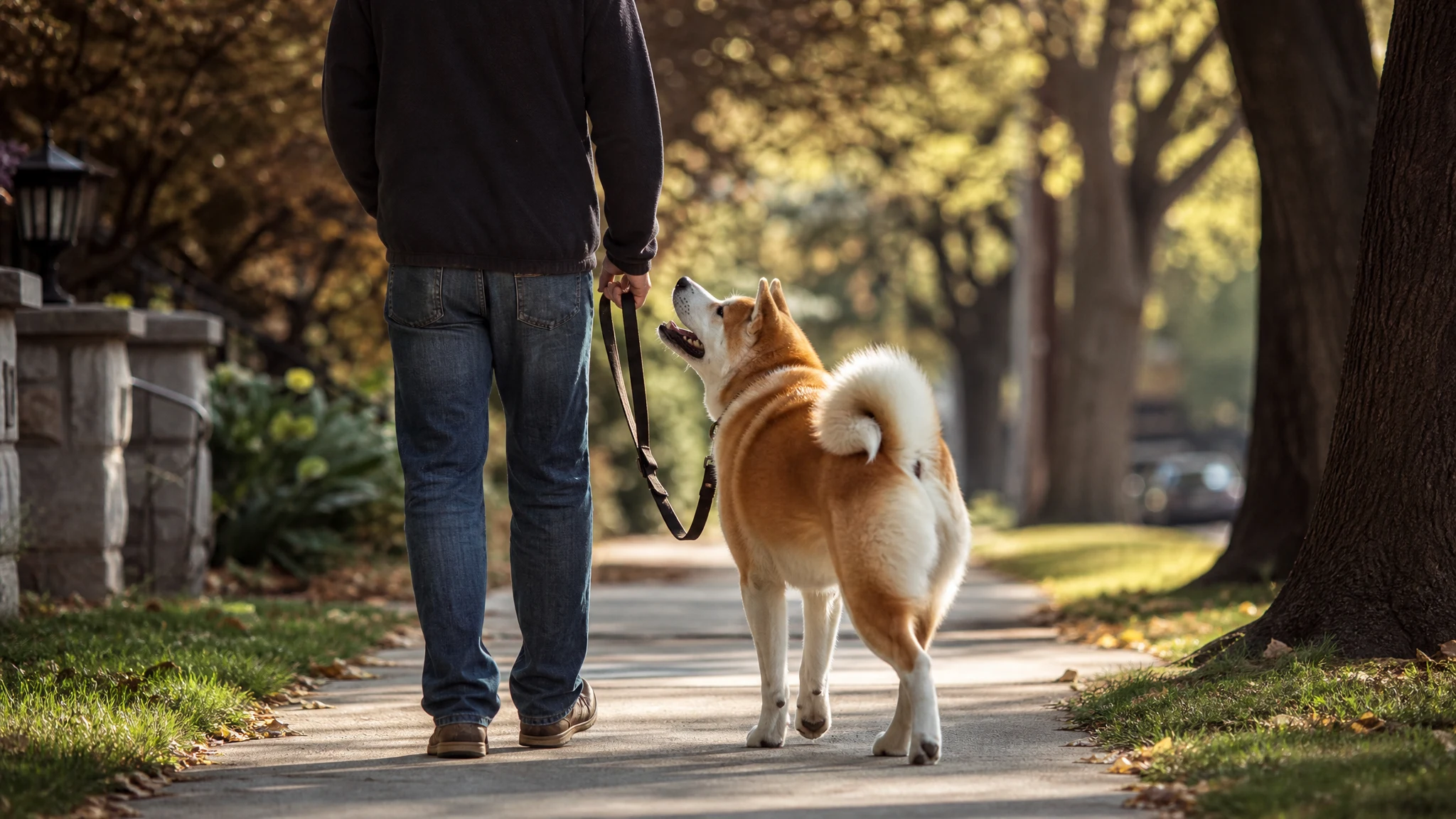
General training information. Every dog is an individual; for health or behavior concerns, see your veterinarian.
A big, strong, independent dog on the end of a leash can turn a simple walk into a tug of war. Akita leash training is worth doing early and doing well, because this is a breed that can weigh well over 100 pounds as an adult.
This guide covers why an Akita pulls, what gear to use, a step-by-step plan for loose-leash walking, and how to handle lunging. Everything here is reward-based, in line with the American Veterinary Society of Animal Behavior (AVSAB). For the wider picture, see our complete guide to Akita training.
Why an Akita Pulls and Lunges
Pulling is normal dog behavior. A dog moves faster than a person, and it learns quickly that pulling gets it where it wants to go. With an Akita, a few breed traits can add to that.
- A hunting background. The American Kennel Club (AKC) says the Akita was bred to hunt in the mountains of northern Japan, going after elk, wild boar and bear. A nose and eyes tuned to movement can pull a dog toward a squirrel, a cat or a rabbit.
- High prey drive. The Akita Club of America (ACA) lists high prey drive among the breed's known challenges. It also says an Akita will go hunting on its own if off leash.
- Independence. The AKC describes the breed as very intelligent and loyal but independent and headstrong. The ACA calls the breed very stubborn when a command is repeated over and over.
- Wariness. The AKC describes Akitas as wary of strangers and often intolerant of other animals. The ACA notes a genetic predisposition toward intolerance of other dogs, especially of the same sex.
Individual dogs vary. Your Akita may be relaxed about squirrels and nervous about men in hats, or the other way around. Watch your own dog and note what sets it off.
Why Lunging Is Different From Pulling
Pulling is usually about getting somewhere. Lunging is usually about a specific trigger, such as another dog, a cat, a bicycle or a stranger. The dog may be excited, frustrated or worried. You often cannot tell which from the outside, and the training plan is similar for all three: more distance, calm rewards and a handler who stays relaxed.
This matters for safety. The ACA says same-sex dog aggression may not develop until a dog is fully mature. A young Akita that tolerates other dogs today may change in its second or third year. Plan your leash skills as if that could happen.
Materials You Will Need
- A flat buckle collar for ID tags, or a well-fitted harness as the main walking gear.
- A front-clip harness that fits properly. The leash clips at the chest, so a pull turns the dog slightly toward you instead of letting it drive forward. Ask a trainer or a good pet store to check the fit.
- A sturdy 4 to 6 foot leash with a comfortable grip. Skip retractable leashes. They teach a dog that pulling extends the walk and give you little control.
- Small, soft, high-value treats that your dog will take outdoors. Pea-sized pieces work well so you can reward often.
- A treat pouch so rewards reach the dog in a second or two.
- A quiet starting place, such as a fenced yard, a hallway or a low-traffic street.
Do not use prong, choke or shock collars. They work by causing discomfort, and AVSAB position statements advise against aversive methods because of the risk of fear, stress and worse behavior. With a breed that may already be wary of strangers and other dogs, the last thing you want is a dog that links those triggers with pain.
Step-by-Step: How to Leash Train a Akita
The AKC says the Akita must be trained consistently, starting in puppyhood. The ACA says the owner should take control early and train the dog personally. Both point the same way: start now, and do the work yourself rather than handing it off.
Step 1: Make the Gear Boring and Pleasant
Put on the harness and collar at home, give a treat, and do something fun like a short game or a meal. Do this for several days. You want the dog to think gear means good things, not that it signals a fight.
Step 2: Teach a Marker and Pay Attention
Pick a marker word such as "yes" or use a clicker. Say it the instant your dog does something right, then give a treat. Next, reward every time your dog looks at you voluntarily. Add its name or a cue like "watch" later.
One caution from the AKC: prolonged eye contact can be seen as a challenge by an Akita. Keep your eye contact with your dog soft and brief, especially with unfamiliar dogs. Reward the dog's glance at you, but do not stare it down.
Step 3: Reward Position by Your Side
Decide which side your dog walks on and stick with it. Hold treats at your hip. Each time the dog is in the right spot with the leash slack, mark and reward it there. Stand still, then take one step, then two, rewarding as your dog stays with you.
Step 4: Add Steps, Then Direction Changes
Once the dog stays close for a few steps, walk longer stretches. Throw in turns and U-turns. Say "this way" cheerfully and move off. A dog that follows you gets a treat. A dog that surges ahead finds you going the other way, which makes staying near you the more rewarding choice.
Step 5: Make Pulling Unrewarding
When the leash goes tight, stop moving. Stand like a tree. Do not yank or jerk. The moment the leash loosens, even a little, mark and reward, then walk on. Another option is to turn and walk the opposite way. The point is simple: tight leash means no progress, slack leash means we go.
This takes patience. A large Akita can tow you if you let it, so keep your feet planted and your hands low, and do not turn the exchange into a contest of strength.
Step 6: Practise in Easy Places First
Move from the yard to the driveway, then a quiet street, then busier areas. At each step, ask for less than you did at home. If the dog begins to ignore treats or pull hard, you have gone too far, too fast. Go back to the last easy place.
Step 7: Build the Loose-Leash Habit With Games
Games keep the work interesting for an independent dog.
- Treat scatter. Toss a few treats on the ground and say "find it." This pulls the dog's nose away from a trigger and calms it.
- Follow me. Change speed and direction, rewarding the dog for keeping up and checking in.
- Sniff break. Use a release word like "go sniff" so the dog earns a short sniff as a reward for a stretch of loose leash.
- Hand target. Teach your dog to touch its nose to your palm. It is a handy way to turn a dog's attention back to you.
Handling Lunging at Triggers
Start by learning what sets your dog off and how much space it needs. The goal is to work under the distance at which your dog reacts, where it can still take a treat and think.
- Spot the trigger early. Look ahead on the walk. Notice other dogs, cats, squirrels and cyclists before your dog does if you can.
- Create distance. Cross the street, turn into a driveway or put a parked car between you and the trigger.
- Mark and feed while the trigger is in view. If your dog notices the trigger without reacting, mark and reward. Keep treats coming as long as the trigger is visible.
- Move off calmly. Use "this way" and leave before the dog escalates.
- Close the gap slowly over many sessions. Only when your dog stays relaxed at one distance should you try a bit closer.
If your dog lunges, do not punish. Just increase distance and move on. A dog that is yelled at or jerked may link the trigger with an unpleasant moment, which can make the reaction stronger over time.
Be careful with other dogs. The ACA says an Akita does best as the only dog or in a male and female pair, and it says dog parks are not appropriate places to socialize an Akita. For leash walks, that means skipping greetings with unfamiliar dogs. Walk past them with distance and let your dog look to you for rewards.
If your dog's reactions are intense, or if lunging at dogs or people is getting worse, work with a qualified trainer who uses reward-based methods. Ask about their methods before you book, and walk away from anyone who recommends prong, shock or choke collars or dominance techniques.
Tips for Better Walks
- Keep sessions short and upbeat. End while your dog is still doing well.
- Exercise before training. The AKC says a jog or brisk walk at least once a day meets the needs of most Akitas, and the ACA describes the breed's exercise needs as medium. A dog that has had its daily exercise can focus better in short training walks.
- Be consistent as a household. Everyone who walks the dog should use the same cue words, the same side and the same rules about pulling.
- Use class time. The ACA describes a puppy class for 3 to 5 month olds, a developmental course that emphasizes socialization. Ask local clubs or trainers about similar classes in your area.
- Keep the leash on in open areas. The ACA warns against letting an Akita off leash in any unsecured area.
- Plan for size. The AKC lists adult males at 100 to 130 pounds and females at 70 to 100 pounds. A habit that is easy to correct in a puppy becomes a safety issue in an adult, so fix pulling early.
Common Mistakes to Avoid
- Letting pulling work sometimes. If the dog pulls to a smell or a friend even once in a while, it learns that pulling pays.
- Repeating cues over and over. The ACA calls the breed very stubborn when a command is repeated. Say a cue once, wait, and help the dog succeed.
- Using corrections instead of rewards. Leash pops and harsh collars can create fear and conflict.
- Greeting other dogs on the leash. A tight leash and a face-to-face meeting between two dogs can start trouble, particularly with same-sex dogs.
- Staring at the dog to get compliance. As noted above, hard eye contact can be taken as a challenge.
- Going out too far, too fast. Jumping to busy streets before basic skills are solid usually sets the dog up to fail.
- Ignoring pain or sudden change. If a dog that walked well begins to pull, lunge or resist walks, talk to your veterinarian before assuming it is only a training issue. The ACA lists joint and other health concerns in the breed.
What Results to Expect
Progress varies by dog, age, history and how often you practise. Many owners notice some improvement within a few weeks of consistent short sessions, but loose-leash walking in distracting places often takes months. An adolescent or fully mature Akita may need longer than a puppy.
Lunging is usually slower to change than simple pulling, and it may never disappear entirely. Many dogs get calmer and easier to redirect with steady work, but no method can promise a specific outcome. Plan on management, such as distance and good timing, as a long-term part of life with this breed.
Track small wins: a longer stretch of slack leash, a quick glance at you when a dog passes, a faster recovery after a trigger. Those are signs the training is working.
A Quick Daily Routine
- Give a short warm-up in the yard with the gear on and a few rewarded steps.
- Walk a quiet route with plenty of treats, turns and sniff breaks.
- Mark and reward each moment of slack leash and every calm look at you.
- Keep distance from other dogs and unfamiliar people.
- Finish with something easy and fun so the dog ends on a good note.
Done consistently, this builds a dog that walks beside you because it is rewarded for doing so, not because it is forced. That fits the breed better than a battle of wills. For more on foundations, house manners and socialization, return to our complete Akita training guide.
Sources
- American Kennel Club: Akita breed page
- American Kennel Club: Akita History
- Akita Club of America: Meet The Akita
- Akita Club of America: Living With An Akita
- Akita Club of America: Frequently Asked Questions
- Akita Club of America: Is it okay to take my Akita to a dog park?
- Akita Club of America: Obedience
- Akita Club of America: Health Concerns