Akita Puppy Training Timeline: 8 Weeks to 2 Years
General training information. Every dog is an individual; for health or behavior concerns, see your veterinarian.
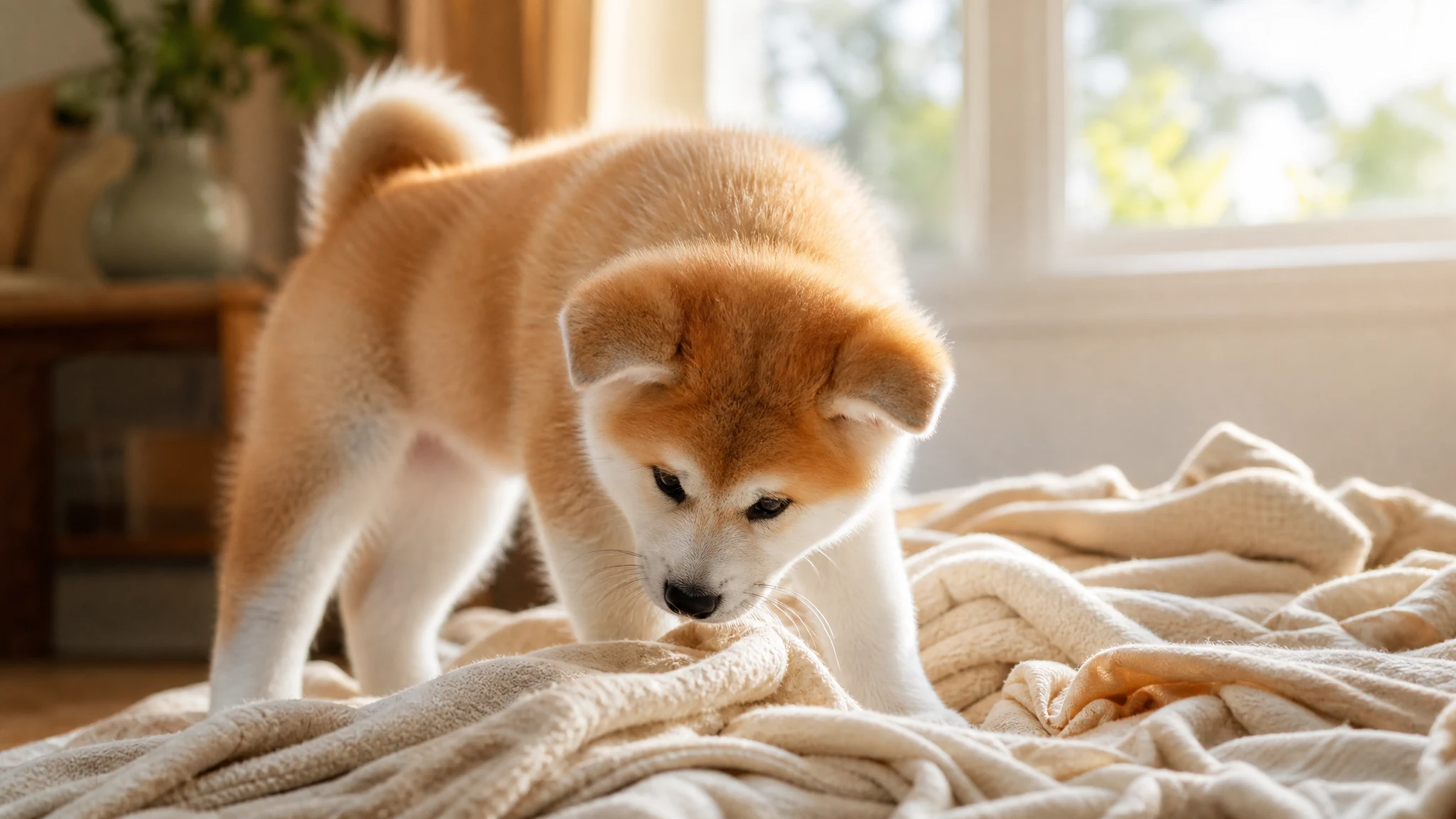
A cute eight-week-old Akita and a full-grown Akita are very different animals. The Akita Club of America (ACA) says as much, and anyone who has lived with the breed agrees. The fluffy bear cub you bring home will become a dog of 24 to 28 inches that was developed to hunt and guard.
That is why akita puppy training works best as a long plan, not a puppy class and a hope. This guide walks through the stages from the first weeks home to about two years old. It covers socialization, house training, bite inhibition, adolescence and maturity. Treat the ages as a rough guide. Individual dogs vary, and your puppy may run ahead of or behind any timeline.
Key takeaways
- The American Kennel Club (AKC) calls the Akita very intelligent and loyal, but independent and headstrong. It says the breed must be trained consistently starting in puppyhood.
- The ACA says the owner should take control early and train the dog personally.
- Socialize widely and calmly. The ACA says dog parks are not appropriate places to socialize an Akita.
- The ACA says intolerance of other dogs, especially of the same sex, may not appear until the dog is fully mature. Keep training and management going past the puppy stage.
- Use reward-based methods only. Harsh corrections do not fit this breed, and they do not fit the guidance of the American Veterinary Society of Animal Behavior (AVSAB).
- Questions about joints, growth or health belong with your veterinarian and your breeder.
In this guide
- Why Akita puppy training is different
- Weeks 8 to 12: settling in and early socialization
- Months 3 to 5: house training, bite inhibition and puppy class
- Months 6 to 12: adolescence
- Months 12 to 24: maturity
- A sample Akita puppy training schedule
- Akita puppy training tips and mistakes to avoid
- Sources
Why Akita Puppy Training Is Different
Akitas come from Japan. The AKC says the breed as we know it was developed in the early 17th century in the Akita prefecture of northern Japan. The AKC says the dogs were bred to hunt in the mountains, going after elk, wild boar and bear. The ACA adds that the Akita was used to guard property, including as a palace guard.
That history shows up in the living room. The ACA describes the breed as proud, confident and exceptionally loyal. The AKC calls Akitas quiet, fastidious dogs that are wary of strangers and often intolerant of other animals. The ACA also notes an instinct to guard the home, and says no training is needed to make an Akita guard.
So you are not training a dog to be tough. You are training a dog that is already serious about its job to be calm, polite and easy to live with.
What the breed clubs say to expect
- Independent thinking. The AKC calls the Akita independent and headstrong. The ACA says the breed can be very stubborn when a command is simply repeated.
- Other dogs. The ACA describes a genetic predisposition toward intolerance of other dogs, especially of the same sex. It says the breed does best as the only dog or in a male and female pair.
- Prey drive. The ACA says cats, small dogs and other small pets need cautious introductions.
- Heavy shedding. The ACA says Akitas shed year-round, with a drastic increase during coat changes. The AKC says the dense undercoat blows twice a year.
- Not an easy first dog. The ACA says the breed is challenging for first-time owners.
None of this means a well-bred, well-raised Akita cannot be a wonderful companion. It means the plan below leans on early structure, patience and plenty of rewards.
One more note on method. Everything here uses food, play and praise to show the dog what you want. Prong, choke and shock collars, alpha rolls, scruffing and dominance tactics have no place in this plan. They conflict with AVSAB guidance, and with a proud, sensitive breed they are a good way to damage trust.
Weeks 8 to 12: Settling In and Early Socialization
This is the stage that shapes everything after it. Your goals are simple: build routines, make the world feel safe and start a few easy skills.
Set up the home
Choose a crate or pen, a sleeping spot and a potty spot before the puppy arrives. Pick a few household rules now and keep them for life. If you do not want a 100-pound dog on the sofa, do not allow a cuddly 15-pound puppy there. Consistency is the heart of akita puppy training, and the AKC says it matters from puppyhood on.
Everyone in the house should use the same cue words. Decide on them in advance: sit, down, come, leave it, wait.
Socialization: calm and wide, not rough and crowded
The ACA runs a developmental puppy class for puppies of 3 to 5 months that emphasizes socialization. Before then, you can start at home with controlled, friendly exposure. Aim for variety:
- Different floor surfaces, such as tile, grass, gravel and stairs
- Household sounds, such as the vacuum, doorbell and dropped pans
- Calm visitors who let the puppy approach in its own time
- Car rides, short and rewarding
- Gentle handling of paws, ears, mouth and collar
Keep each experience short and pair it with treats. If the puppy backs away, increase the distance and try again later. Never force a greeting.
For other dogs, choose a small number of calm, vaccinated, well-mannered adult dogs. Ask your veterinarian which outings are safe while vaccinations are in progress. Skip the dog park. The ACA says dog parks are not appropriate places to socialize an Akita. Because the ACA describes a predisposition toward intolerance of other dogs, the goal is neutral, relaxed manners, not wild play with strangers.
First skills
- Name response. Say the name, then reward when the puppy looks at you.
- Sit and down. Lure with a treat, then fade the lure.
- Crate comfort. Feed meals in the crate and give chews there.
- Handling. Touch, then treat. This makes the vet and groomer easier later.
Keep sessions to a few minutes. An intelligent, independent puppy gets bored fast.
Months 3 to 5: House Training, Bite Inhibition and Puppy Class
This is the busy middle of akita puppy training. The puppy is learning fast, and it is also teething, testing and growing.
House training
House training is mostly management. Prevent mistakes, reward successes and keep a predictable rhythm.
- Take the puppy out after waking, after meals, after play and before bed.
- Go to the same spot every time and use a calm cue word.
- Reward right away, within a couple of seconds, with a treat and praise.
- Supervise indoors or use the crate or pen when you cannot watch.
- If an accident happens, clean it with an enzyme cleaner and say nothing. Punishing accidents teaches a puppy to hide them.
The AKC describes the Akita as fastidious, and many owners find the breed tidy once the routine clicks. Still, young puppies have small bladders and limited control, so expect slips and do not read them as stubbornness.
Bite inhibition
Puppies explore with their mouths. With a dog that will weigh 70 to 130 pounds as an adult (the AKC gives 100 to 130 pounds for males and 70 to 100 pounds for females), mouth manners matter from day one.
- Offer toys and chews freely so the puppy has legal targets.
- When teeth touch skin, calmly stop play and stand up or step away for a few seconds.
- Return and reward gentle behavior, then redirect to a toy.
- Avoid hand-wrestling and rough games. They teach the puppy that hands are toys.
- Keep play sessions short, then offer a rest in the crate before the puppy gets overtired.
The goal is a soft mouth, not a dog that never uses its mouth at all. Never hit, flick or hold the muzzle shut. Those methods raise stress and can make mouthing worse.
Puppy class and structured socialization
The ACA offers a puppy class for 3 to 5 month olds, built around socialization. Check the ACA site or ask your local Akita club what is available near you. If no breed-specific class exists, look for a small, reward-based puppy class with a trainer who is comfortable with large, independent breeds. Visit first and watch a session. Leave if the class uses force or lets puppies swarm and bully each other.
Children need a rule of their own. The ACA says interactions with children should be respectful and well monitored. Supervise every meeting. Teach kids not to hug, climb on or stare into the face of the puppy.
Skills to add
- Loose-leash walking. Reward position next to you. Stop moving when the leash tightens.
- Come. Practice indoors and in a fenced area with high-value treats. Never call the dog to scold it.
- Leave it and drop it. Trade items for treats so the puppy learns that giving something up pays.
- Wait at doors. A large guarding breed should not bolt through gates.
Months 6 to 12: Adolescence
Adolescence is where many owners struggle. The puppy looks nearly grown and may start to ignore cues it knew perfectly well. This is normal for the stage. The AKC describes the breed as independent and headstrong, and adolescence tends to bring that out.
Keep the foundation going
Do not stop classes or daily practice because the puppy "already knows it." Raise the difficulty gradually: add distance, duration and distractions. Reward well, and go back a step if the dog struggles.
Short, fun sessions still beat long drills. The ACA says the breed can be very stubborn when a command is just repeated. If your dog does not respond, do not repeat the cue ten times. Reset, make it easier and pay for the right answer.
Exercise for a growing dog
The ACA lists the Akita's exercise level as medium. The AKC says moderate exercise, such as a jog or brisk walk at least once a day, meets the needs of most Akitas. The ACA says the breed is not an overly hyper one, but a good walk or jog is part of the day.
The facts on joint care and growth in young Akitas are not something we can supply here. Ask your veterinarian and your breeder how much running, jumping and stair work suits your puppy at each age. That matters because the ACA lists hip dysplasia among the most common health concerns in the breed.
Safety on walks and at home
- Do not allow off-leash freedom in unsecured areas. The ACA flags off-leash risk, and it says an Akita will go hunting on its own if off leash. Use a fenced yard or a long line.
- Watch other dogs. The ACA says same-sex intolerance may not develop until the dog is fully mature. Keep leashes short and give other dogs space on walks.
- Take care with small pets. The ACA recommends cautious introductions to cats and small dogs because of prey drive.
- Avoid staring contests. The AKC notes that prolonged eye contact can be seen as a challenge by an Akita. Teach the dog to look at you for rewards, but do not stare down your dog or strangers' dogs.
Management is training too
Use gates, secure fencing and calm routines. Prevent your dog from rehearsing things you do not want, such as fence-running, lunging at passing dogs or guarding food. If any of these start, contact a qualified reward-based trainer or a veterinary behavior professional early.
Months 12 to 24: Maturity
The ACA says some behavior, especially aggression toward same-sex dogs, may not appear until the dog is fully mature. So the second year is not the time to relax. It is the time to lock in what you built.
What to expect
The ACA gives adult sizes of 26 to 28 inches for males and 24 to 26 inches for females. The AKC gives a life expectancy of 10 to 14 years. How quickly any one Akita reaches physical and mental maturity is not something we can state from the breed sources here, so ask your breeder and veterinarian what to expect for your dog.
You may see changes in how your dog handles other dogs, strangers and its territory. The AKC calls the breed wary of strangers and often intolerant of other animals. Plan for this instead of hoping it will not happen.
Keep up the plan
- Continue practice. Refresh sit, down, come, wait, leave it and loose-leash walking on a regular basis.
- Stay careful with other dogs. Many Akitas do best as the only dog. If you have more than one dog, the ACA suggests a male and female pair.
- Keep visitors calm. Teach a place or mat cue and reward the dog for settling when guests arrive.
- Keep health care current. See your veterinarian regularly. The ACA lists hypothyroidism, ocular diseases, sebaceous adenitis and bloat among the most common concerns, and the AKC names hip dysplasia and bloat. Only a veterinarian can tell you what applies to your dog.
Give the dog a job
The ACA lists many Akita activities: agility, barn hunt, Canine Good Citizen and trick dog, conformation, dock diving, FastCAT, obedience, rally, scent work, therapy, and weight pull and carting. You do not need a ribbon. A few of these, especially scent work, trick training or Canine Good Citizen prep, give an intelligent, independent dog mental work that suits a medium-energy breed. Check with the ACA or the sport's organization about eligibility and rules for your dog.
A Sample Akita Puppy Training Schedule
Here is a simple akita puppy training schedule you can adapt. Ages are approximate, and your puppy sets the pace.
| Stage | Main goals | Daily practice |
|---|---|---|
| 8 to 12 weeks | Routine, crate comfort, gentle handling, calm exposure to new things | Frequent potty trips, several very short training sessions, one or two new experiences |
| 3 to 5 months | House training, bite inhibition, puppy class, basic cues | Potty schedule, short sessions, supervised play, class and homework |
| 6 to 12 months | Hold the line through adolescence; leash skills, recall, impulse control | Daily walk, mental work, practice with distractions, management at home |
| 12 to 24 months | Reliable manners, safe handling of other dogs, a job or sport | Brisk walk or jog, short refreshers, activity of your choice |
A typical day with a young puppy
- Morning: potty trip, breakfast, a short training session, supervised play, then crate rest.
- Midday: potty trip, a short walk or yard time if your veterinarian approves, a chew in the crate.
- Afternoon: potty trip, a socialization outing or a quiet visitor, then another rest.
- Evening: dinner, a training session, calm family time, last potty trip, then bed.
Rest matters as much as activity. Puppies who do not nap get nippy and wild.
Akita Puppy Training Tips and Mistakes to Avoid
Tips that work with the breed
- Start early and stay consistent. The AKC says the breed must be trained consistently from puppyhood.
- Train the dog yourself. The ACA says the owner should lead and train the dog personally. A weekend board-and-train will not replace daily work at home.
- Make it worth the dog's while. Use real food and games. An independent dog asks, "What is in it for me?"
- Keep sessions brief and varied. Stop on a success.
- Teach calm. Reward quiet settling on a mat or in the crate as much as you reward tricks.
- Choose a health-tested breeder. The ACA says puppies of affected parents are more susceptible to inherited problems. Its recommended minimum screens are an OFA or PennHip hip evaluation, an OFA Companion Animal Eye Registry exam and a thyroid panel with TgAA. Ask to see the results.
Mistakes to avoid
- Using force. Harsh corrections do not fit AVSAB guidance. They damage trust in a dog that is already wary.
- Using dog parks. The ACA says they are not appropriate for socializing an Akita.
- Skipping socialization because the dog is "naturally guarded." The ACA says Akitas guard without training. The job of training is to teach the dog what is normal and safe, so it can relax.
- Allowing off-leash roaming. The ACA flags the risk, and a fenced yard or long line is safer.
- Letting small problems slide. Resource guarding, snarking at other dogs or pulling hard are easier to fix early.
- Assuming a quiet puppy means no work. The ACA calls the breed generally quiet and not prone to nuisance barking, but quiet does not mean easy.
If you feel out of your depth, that is not failure. The ACA says the breed is challenging for first-time owners. Get help from a qualified reward-based trainer early, and ask your veterinarian to rule out pain or illness if behavior changes suddenly.
Final thought
Good akita puppy training is a two-year project with a lifelong payoff. Stay calm, stay consistent and reward what you like. Done well, you will end up with a dignified, loyal dog that is a pleasure to live with.
Sources
- American Kennel Club: Akita breed page
- American Kennel Club: Akita History
- Akita Club of America: Meet The Akita
- Akita Club of America: The Akita
- Akita Club of America: Living With An Akita
- Akita Club of America: Frequently Asked Questions
- Akita Club of America FAQ: Dog park
- Akita Club of America: How To Find the Right Puppy
- Akita Club of America: Obedience
- Akita Club of America: Akita Activities
- Akita Club of America: Health Clearances
- Akita Club of America: Health Concerns
- Akita Club of America: Genetics