How to Potty Train a Akita Puppy
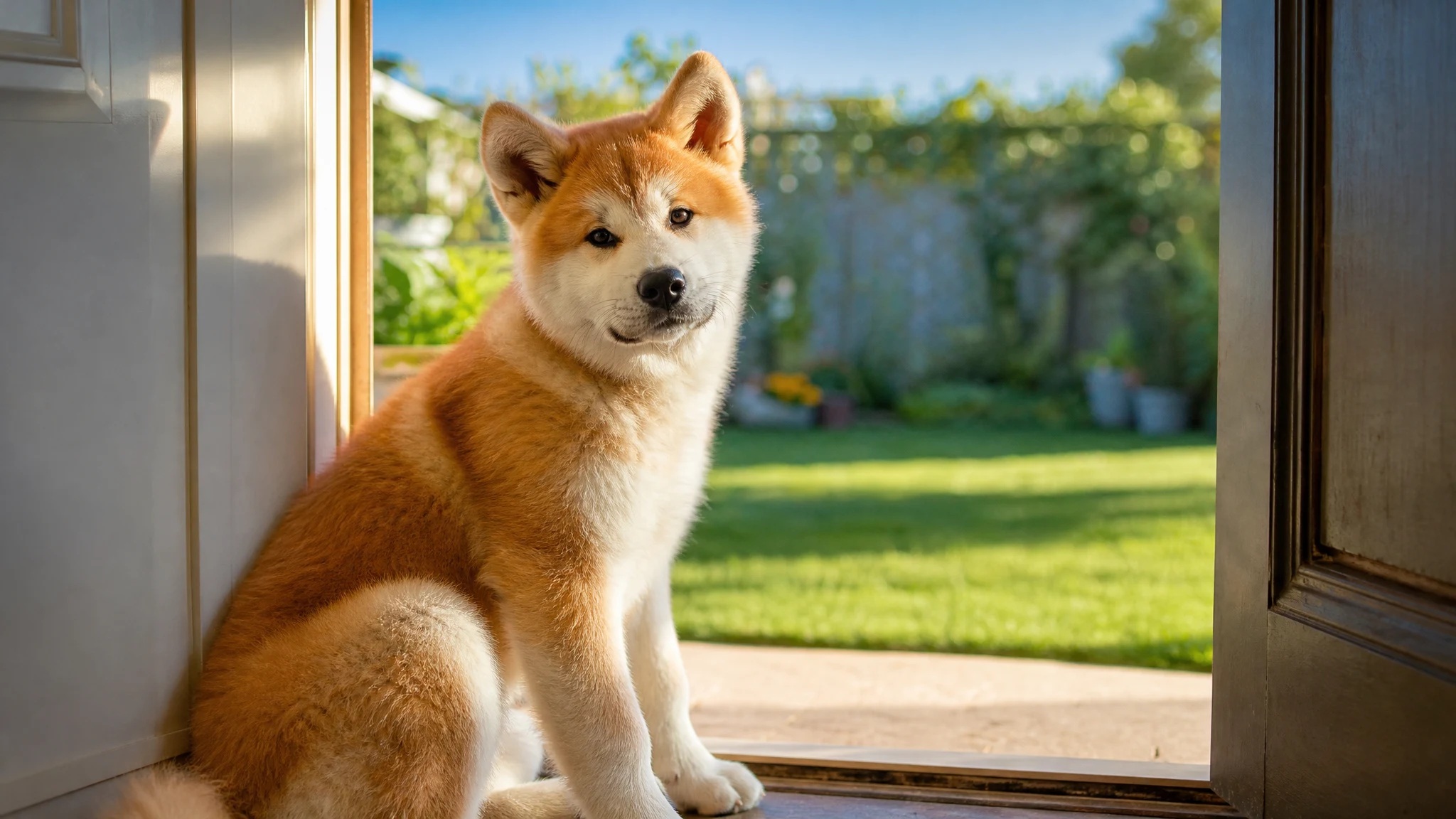
General training information. Every dog is an individual; for health or behavior concerns, see your veterinarian.
An Akita puppy looks small and fluffy for about five minutes. Then it grows. The American Kennel Club (AKC) lists adult males at 100 to 130 pounds and females at 70 to 100 pounds. The Akita Club of America (ACA) gives the same adult height range: 26 to 28 inches for males and 24 to 26 inches for females. A habit you let slide at eight weeks becomes a much bigger cleanup at eight months.
The good news is that the AKC describes the Akita as a quiet, fastidious dog. Plenty of owners find that a clean, predictable routine suits the breed well. Individual dogs vary, so treat that as a reason for optimism, not a promise.
This guide covers akita potty training from the first day home: a schedule, crate use, what to do after accidents, and how long house training an Akita usually takes.
What You Need Before the Puppy Comes Home
Keep the list short. You do not need gadgets.
- A crate sized for the dog's growth. A puppy needs room to stand, turn and lie down. An adult Akita is a big dog, so many owners choose a crate with a divider, or plan to upgrade. Check sizing with your breeder or veterinarian.
- A playpen or baby gate. This keeps the puppy in one easy-to-clean area when you cannot watch closely.
- A leash and a flat collar or harness. You will use the leash for every potty trip, even in the yard.
- Small, soft treats. Use tiny pieces your puppy loves. Count them as part of the daily food, and ask your veterinarian how much treat food is right.
- An enzymatic cleaner made for pet messes. It helps remove the smell that can draw a puppy back to the same spot.
- A notebook or phone note. Logging meals, naps, and potty trips makes patterns easy to see.
- A timer. Puppies lose track of time, and so do owners.
Why the Akita Needs a Plan Early
The AKC calls the Akita very intelligent and loyal, but also independent and headstrong, and says the breed must be trained consistently starting in puppyhood. The ACA says the owner should take control early and train the dog personally. The ACA also calls the breed very stubborn when a command is simply repeated over and over.
For potty training, that points to a few practical choices:
- Do not hand the job off to whoever has time. Pick one or two people who run the routine, and have everyone else follow the same rules.
- Do not nag. Say your cue once, wait, and reward when the puppy goes. Repeating yourself gains nothing with a dog that tunes out repetition.
- Make good choices easy and rewarding. Management does more of the work than commands do.
The ACA also notes the Akita should never be off leash in an unsecured area. For potty trips, that means a leash on the puppy any time the yard is not fully fenced.
Step-by-Step: How to Potty Train an Akita Puppy
Step 1: Pick one potty spot and take the puppy there every time
Choose a patch of yard that is easy to reach quickly. Walk the puppy there on leash, stand still, and stay boring. Say a calm cue such as "go potty" once. Then wait.
If the puppy goes, praise quietly and give a treat right away, while the puppy is still in the spot. Treats given after you come back inside reward the wrong thing.
If nothing happens after a few minutes, go inside and keep the puppy in the crate or pen for a short stretch. Then try again. Do not turn the potty trip into a play session, or the puppy learns that outside is for fun and sniffing.
Step 2: Build a schedule around the puppy's body, not the clock alone
Most young puppies need to go at predictable moments. Plan a trip at each of these:
- First thing in the morning, before anything else
- Right after the puppy wakes from any nap
- Within a few minutes after eating or drinking
- After a bout of play or excitement
- Just before the puppy goes into the crate
- Last thing at night
Between those, many owners add a trip about every hour or two while the puppy is awake and young, then stretch the gaps as the puppy matures. How long a puppy can comfortably wait differs from dog to dog. Ask your veterinarian what is reasonable for your puppy's age, and use your log to see your own dog's pattern. No Akita-specific bladder figures are published by the AKC or the ACA, so treat any exact number you read elsewhere with caution.
Feed at set times and pick up the water bowl on a sensible schedule your veterinarian is comfortable with. A predictable intake makes a predictable output.
Step 3: Use the crate as a resting place, not a punishment
Dogs generally avoid soiling the place where they sleep, which is why a crate can help. It only works if the crate is the right size and the puppy is not left in it too long. A crate that is too large lets the puppy use one corner as a bathroom. A puppy left too long has no choice but to go.
Introduce the crate gently:
- Toss treats inside and let the puppy walk in and out freely.
- Feed a meal or two near or inside the crate.
- Close the door for a minute while you stay in the room, then open it before the puppy fusses.
- Build the time slowly.
Take the puppy straight to the potty spot when it comes out of the crate. Carry a young puppy if you need to, so there is no accident on the way.
If your puppy cries in the crate, check whether it needs to go out. If it just wants company, wait for a pause in the noise before opening the door, so the puppy does not learn that crying opens it. If the crying is intense or does not improve, ask your veterinarian or a reward-based trainer for help.
Step 4: Supervise every minute the puppy is out of the crate
Free access to the whole house is the fastest way to create accidents. When the puppy is out, keep it in the same room as you. A leash clipped to your belt works well for this. Watch for the signs that usually come before going:
- Sniffing the floor in circles
- Wandering off toward a corner or doorway
- Sudden stopping in the middle of play
- Whining or standing at the door
When you see one, calmly take the puppy outside. If you cannot supervise, put the puppy in the crate or a small pen. That is not a failure. It is how you prevent practice at the wrong behavior.
Step 5: Handle accidents without punishment
Accidents will happen. How you respond decides whether the puppy learns or just learns to hide.
- If you catch it in the act, make a small interrupting noise, calmly scoop the puppy up, and carry it to the potty spot. If the puppy finishes there, reward it.
- If you find it later, clean it up and say nothing. The puppy cannot connect a scolding to something that happened minutes ago.
- Never rub a nose in it, yell, or physically correct the puppy. The American Veterinary Society of Animal Behavior (AVSAB) supports humane, reward-based training, and punishment can teach a puppy to avoid going in front of you. That makes outdoor potty trips harder.
For a breed the AKC describes as independent and headstrong, a harsh response is also likely to backfire. Stay calm, clean thoroughly, and tighten up the schedule.
Step 6: Reward heavily, then thin out the treats
In the first weeks, reward every successful trip. As the puppy gets reliable, move to rewarding most trips, then some. Praise and a short play session after the potty can slowly replace the treat. Keep treats in your pocket for new places and for days when things slip.
Step 7: Extend freedom in small steps
When the puppy goes a couple of weeks with no accidents, open up one more room or give a little more unsupervised time. If accidents return, step back to the last setup that worked. Going backward for a few days is normal and not a sign of failure.
A Sample Daily Rhythm
Adjust this to your household and your veterinarian's feeding advice.
| Time of day | What happens |
|---|---|
| Wake up | Straight outside on leash to the potty spot |
| After breakfast | Potty trip within a few minutes, then supervised play |
| Mid-morning | Potty trip, then nap in the crate or pen |
| After the nap | Potty trip first, then a short training game |
| Midday meal | Potty trip afterward, then supervised time |
| Afternoon | Repeat: potty, play, potty, nap |
| Evening meal | Potty trip afterward, then calm family time |
| Before bed | Last potty trip, then into the crate |
| Overnight | Young puppies may need a quiet trip out; keep it dull and short |
Breed Notes for Akita Owners
Size changes everything. The ACA points out that a cute eight-week-old is very different from a full-grown adult. Teach good potty manners now, while you can still pick the puppy up and carry it outside.
Skip the dog park. The ACA says dog parks are not appropriate places to socialize an Akita. That matters for potty training too, because a busy park is a poor place to teach focus. Use your own yard or a quiet, familiar spot. The ACA also describes a genetic predisposition toward intolerance of other dogs, especially of the same sex, which may not show until the dog is fully mature, so keep potty trips calm and uncrowded.
Take a puppy class. The ACA describes a puppy class for 3 to 5 month olds that emphasizes socialization. Check with a local reward-based trainer or club for what is offered near you. Class is a good place to practice settling and handling, though the real potty work happens at home.
Expect an independent learner. The AKC says the breed is independent and headstrong, and the ACA calls the Akita challenging for first-time owners. If you are new to dogs, keep the plan simple, stay consistent, and consider a reward-based trainer for coaching. No source in my research says Akitas are harder or easier to house train than other breeds, so go by your own puppy.
How Long Does It Usually Take?
There is no breed-specific timeline from the AKC or the ACA. Across dogs in general, many owners see real progress within a few weeks of a steady routine, while fully reliable habits can take several months. Some puppies take longer. Growth, health, and consistency all play a part.
If your puppy seems to be having frequent accidents despite a good routine, or is straining, or going far more often than expected, talk to your veterinarian. Medical problems can look like training problems, and a veterinarian is the right person to sort that out.
Common Mistakes to Avoid
- Giving too much freedom too soon. A puppy loose in the house will find a corner.
- Waiting for the puppy to ask. Many puppies give little warning. Take them out on a schedule.
- Skipping the leash in the yard. The ACA warns against off-leash time in unsecured areas, and a leash keeps the trip focused.
- Repeating the cue again and again. Say it once and wait.
- Punishing accidents. It slows learning and can damage trust.
- Using a crate that is too big or leaving the puppy in it too long. Either one sets the puppy up to fail.
- Letting different family members use different rules. Agree on the spot, the cue, and the reward.
- Skipping the cleaner. Leftover scent can invite a repeat.
- Changing the plan after one bad day. Stay with it for a couple of weeks before judging.
What Results to Expect
With a steady schedule, close supervision, and calm rewards, many puppies start to understand the routine within a few weeks. Accidents usually become less frequent, though setbacks around growth spurts, new places, or changes in routine are common. Results vary by dog and by household, and no plan works the same way for every puppy.
Stay patient, keep the log, and ask your veterinarian or a reward-based trainer when you are stuck. An Akita that learns clean habits early is a much easier dog to live with at 100 pounds.