Crate Training a Akita and Preventing Separation Anxiety
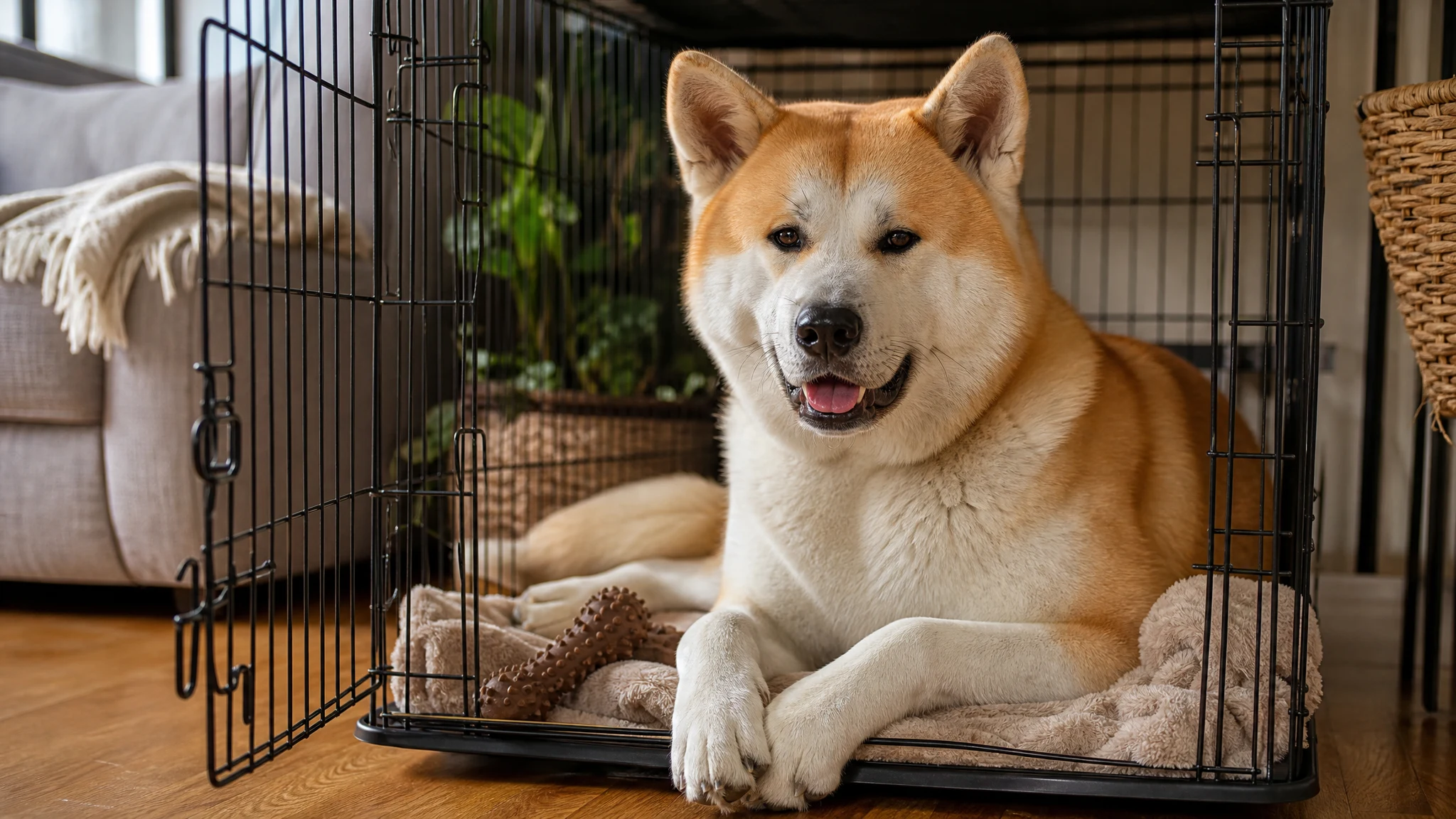
General training information. Every dog is an individual; for health or behavior concerns, see your veterinarian.
An Akita that sees the crate as a quiet den is easier to live with. It is also safer for the dog. A calm crate habit helps with vet visits, travel, house guests and the day you need to leave the house without a fuss.
This guide walks through Akita crate training in order, from picking the crate to building alone time. It also covers the early signs of separation distress and when to call your veterinarian. Every dog is an individual, so treat the timing as a guide and not a schedule.
Why the crate matters for this breed
The Akita Club of America (ACA) describes the Akita as proud, confident and exceptionally loyal. The American Kennel Club (AKC) calls the breed very intelligent and loyal but also independent and headstrong. It says Akitas must be trained consistently starting in puppyhood.
The ACA also says the owner should take control early and train the dog personally. A crate gives you a calm, predictable way to do that from the first week. It does not replace exercise, company or training. It is one tool among several.
The ACA notes a genetic predisposition toward intolerance of other dogs, especially of the same sex. It also lists high prey drive, so cats and small pets need cautious introductions. A crate gives you a safe place to put the dog while a new pet, a visitor or a delivery is in the house.
Materials you will need
- A sturdy crate. A wire crate with a divider panel is a practical choice for a growing puppy. A solid plastic travel crate is useful for car trips.
- A washable mat or bed. Pick something that is hard to shred, since puppies chew.
- Chew items and food puzzles. Choose ones sized for a large dog so they are not a choking risk. Ask your vet if you are unsure what is safe.
- Small, soft treats. Use something your dog loves and cut it into tiny pieces.
- A cover or crate blanket. This is optional. Some dogs settle better with the sides covered.
- A timer or phone. You will track short alone-time sessions.
Choosing the right crate size
Crate size depends on how big your Akita will be, so start with the adult numbers. The AKC lists males at 26 to 28 inches tall and 100 to 130 pounds. It lists females at 24 to 26 inches tall and 70 to 100 pounds. The ACA gives typical weights of 100 to 115 pounds for males and 75 to 90 pounds for females.
The ACA also warns that a cute eight-week-old is very different from a full-grown adult. It adds that the size of a puppy's parents matters for adult height. Ask the breeder about both parents' sizes.
Do not guess at inches. Crate makers publish their own sizing charts, so check the chart for the brand you are considering and match it to your dog's current and expected adult measurements. As a general rule, an adult should be able to stand up without ducking, turn around easily and lie stretched out on their side.
For a puppy, buy a crate that fits the adult and use the divider to shrink the space for now. A crate that is too big can make house training harder, because the dog can use one end as a toilet. A crate that is too small is uncomfortable and works against you.
Step-by-step: crate training an Akita
Step 1: Set up the space
Put the crate in a room where the family spends time, such as a living room or the corner of a kitchen. Akitas are described by the ACA as a home guardian breed, and many dogs like to keep an eye on the household. Isolating the crate in a far room can make the dog feel shut out.
Avoid direct sun, drafts and spots next to a heating vent. Place the mat inside and leave the door fixed open so it cannot swing shut and startle the dog.
Step 2: Make the crate a good place
Drop treats near the door, then just inside, then at the back. Let your dog walk in and out freely. Do not push or lure by force. Praise quietly when a paw or nose crosses the threshold.
Feed some meals inside the crate with the door open. This builds a simple link between the crate and good things. Keep the sessions short, a few minutes at a time, several times a day.
Step 3: Add a cue
When your dog goes in on their own, say a short cue such as "crate" or "bed" in a calm voice. Reward the moment they step inside. After several days they may begin to head in when they hear it.
The ACA calls the breed very stubborn when a command is repeated. So say the cue once, wait a few seconds, then help with a treat placed inside. Do not nag. Repeating yourself over and over teaches the dog to ignore you.
Step 4: Close the door for a moment
Once your dog goes in happily, close the door for two or three seconds while they chew or lick a stuffed toy. Open the door before they fuss. Then build up to 10 seconds, 30 seconds, a minute and so on.
Sit nearby at first and read a book or look at your phone. Do not stare into the crate. The AKC notes that an Akita may take prolonged eye contact as a challenge, so keep your manner relaxed and neutral.
Step 5: Stay in the room, then step away
When your dog settles for five to ten minutes with you in the room, start moving around. Walk to the other side of the room, then out of sight for a few seconds, then back. Keep the comings and goings dull. Skip the big greetings.
If your dog whines, do not open the door at that moment. Wait for a brief pause, even a second of quiet, and then let them out. Otherwise the dog learns that noise opens the door. If the whining is constant, you moved too fast. Go back a step.
Step 6: Practice short absences
Start leaving the house for a few minutes. Give a chew or puzzle just before you go and keep your exit calm. Come back, wait until your dog is quiet, and then open the crate without fanfare.
Vary the length: five minutes, then 20, then 10, then 45. Mixing up the times keeps your dog from guessing how long you will be gone. Over weeks, many dogs build up to longer stretches, though results vary from dog to dog.
Step 7: Use the crate at night
For a puppy, put the crate in or near your bedroom so you can hear when they need a break. Young puppies cannot hold it all night, so expect to take them out. Keep these trips quiet and boring, then return to the crate.
As your dog matures and can sleep through, you can move the crate if you wish. Let the dog decide how quickly this happens, and move it a little at a time.
Preventing separation anxiety
Separation anxiety is a distress response when a dog is left alone. Crate training does not prevent it on its own. A dog that panics in a crate may even hurt themselves. The goal is to build a calm, confident dog who can handle time apart, with the crate as one comfortable option, not a fix.
None of the breed sources we relied on single out separation anxiety as a trait of the Akita. The ACA does describe an exceptionally loyal dog, so plan to teach independence on purpose and not leave it to chance.
- Practice alone time from the start. Short, calm separations in the first weeks set a pattern. Include times when you are home but the dog is in another room.
- Keep departures and arrivals low-key. A big emotional goodbye or hello makes the absence feel like a big event.
- Meet exercise and enrichment needs. The ACA describes the Akita's exercise level as medium. The AKC says a brisk walk or jog at least once a day meets the needs of most. Walk on a leash or in a securely fenced area. The ACA warns against going off leash in an unsecured area, and says an Akita off leash may go hunting on its own.
- Socialize carefully. The ACA says dog parks are not appropriate places to socialize an Akita. Its puppy class for 3 to 5 month olds, which emphasizes socialization, is one controlled option to ask the club about.
- Never use the crate as punishment. The crate should always be a place the dog chooses to rest.
Use reward-based methods only. The American Veterinary Society of Animal Behavior (AVSAB) supports humane, reward-based training. Do not use shock, prong or choke collars, and skip any method built on intimidation or dominance. They damage trust and tend to make fear worse.
Signs of separation distress
Some fussing in the first days is normal. Watch for patterns that continue or get worse. Common signs of distress when a dog is left alone include:
- Nonstop barking, howling or whining that does not settle
- Heavy drooling or panting that starts as you prepare to leave
- Frantic scratching or chewing at the crate door, or at doors and window frames
- Toileting indoors in a dog that is otherwise house trained
- Refusing food or treats when you are gone
- Following you from room to room and being unable to settle when you are home
Note that the ACA describes the Akita as generally quiet and not prone to nuisance barking. If your dog is suddenly very vocal when alone, that is worth noting.
When to see a veterinarian
Call your veterinarian if the distress is intense, if your dog injures themselves in the crate (broken nails, bleeding gums, bent wire), or if the signs do not ease with gradual practice. Sudden changes in behavior, such as new house soiling or loss of appetite, can also have a medical cause that only a vet can check.
Your vet can rule out pain or illness. They can also tell you whether to see a qualified behavior professional. Do not give any medication or supplement to treat anxiety unless your vet has prescribed or approved it.
Also tell your vet if your dog seems restless, drools or tries unsuccessfully to vomit, or if the belly looks swollen. The ACA lists bloat (gastric dilatation volvulus) among the more common health concerns in the breed. It is an emergency, so call a vet at once.
Common mistakes to avoid
- Going too fast. Skipping from five minutes to two hours is the most common cause of crate panic.
- Letting the dog out during a fuss. Wait for a pause in the noise, even a brief one.
- Using a crate that is too big or too small. Check the maker's sizing chart and adjust with a divider.
- Leaving a puppy crated too long. Young puppies need frequent breaks. Build duration slowly and ask your vet about a sensible schedule.
- Crating a dog with too little exercise. A dog with pent-up energy will struggle to settle.
- Leaving a collar or tag on in the crate. These can catch on wire. Ask your vet or the crate maker for safety advice.
- Housing two dogs where they can reach each other. Given the ACA's note on intolerance of other dogs, keep any other dogs apart when the crate is in use.
What results to expect
With steady, patient practice, many Akitas learn to rest quietly in their crate within a few weeks. Others take longer, and some need extra help. Progress is rarely a straight line, and a change such as a move, a new baby or a schedule shift can cause a setback.
Gradual alone-time practice may reduce the chance that your dog becomes distressed when left. It cannot promise to prevent separation anxiety in every dog. If you are struggling, check with your veterinarian and ask the Akita Club of America about breed-experienced help.
The ACA also says the Akita can be challenging for first-time owners. If you are new to the breed, consider working with a reward-based trainer in your area alongside this guide.
Sources
- American Kennel Club, Akita breed page
- Akita Club of America, Meet The Akita
- Akita Club of America, The Akita
- Akita Club of America, Living With An Akita
- Akita Club of America, Frequently Asked Questions
- Akita Club of America, How To Find the Right Puppy
- Akita Club of America FAQ, dog park
- Akita Club of America, Obedience
- Akita Club of America, Health Concerns